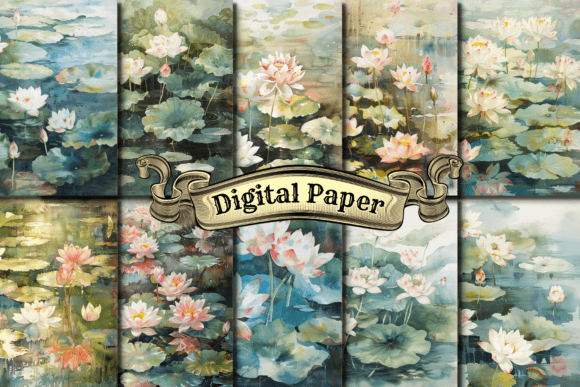
Evaluating Watercolor Lotus Flower Assets for Professional Design
In the competitive landscape of digital design and print media, sourcing high-quality botanical illustrations is a frequent necessity for creative professionals. The watercolor lotus flower has emerged as a staple motif across wellness branding, wedding stationery, spiritual content, and organic product packaging. However, not all floral assets are created equal. For marketers, freelancers, and small business owners, distinguishing between generic clip art and professional-grade watercolor lotus flower illustrations is critical to maintaining brand integrity and visual cohesion.
This evaluation focuses on the practical application, technical quality, and strategic value of incorporating watercolor lotus flower imagery into commercial and personal projects. Rather than treating these assets as mere decoration, we analyze them as functional design elements that must meet specific production standards and audience expectations.
Defining Quality in Botanical Illustration
When evaluating a watercolor lotus flower asset, the primary metric is technical fidelity. In professional workflows, an illustration must withstand scrutiny at various scales, from social media avatars to large-format banners. High-value assets typically exhibit distinct characteristics that separate them from amateur or AI-generated alternatives.
- Edge Integrity: Authentic watercolor renders display natural pigment bleeding and soft transitions. Low-quality scans or digital imitations often have harsh, pixelated edges or artificial blurring that fails to replicate the capillary action of paint on paper.
- Color Depth and Transparency: A usable lotus illustration should retain layer transparency. This allows designers to overlay the flower onto colored backgrounds or textures without a distracting white box or opaque halo effect.
- Anatomical Accuracy: While stylization is common in watercolor art, the structural integrity of the lotus matters. Professionals look for correct petal arrangement and stem proportions, as botanical inaccuracies can undermine credibility in educational or nature-focused niches.
- Resolution Standards: For print applications, assets must be available at 300 DPI or higher at the intended physical size. Vector-based watercolor hybrids offer superior flexibility, allowing infinite scaling without loss of the painted texture.
Practical Applications Across Industries
The versatility of the watercolor lotus flower extends beyond aesthetic appeal; it serves specific communicative functions depending on the industry. Understanding these contexts helps professionals select the appropriate style and composition.
Wellness and Holistic Health Branding
In the wellness sector, the lotus is semantically linked to mindfulness, purity, and regeneration. Spa owners, yoga instructors, and mental health practitioners utilize these illustrations to signal safety and tranquility. Here, the watercolor medium is particularly effective because its fluid, organic nature contrasts with the rigid geometry of corporate healthcare design. When selecting assets for this niche, prioritize softer color palettes (muted pinks, sage greens, and watery blues) and open compositions that allow ample negative space for typography.
Wedding and Event Stationery
For stationers and event planners, the watercolor lotus flower is a perennial favorite due to its romantic yet structured appearance. Practical usability in this context depends heavily on modularity. Designers require assets where individual petals, buds, and leaves are separated or easily isolatable. This flexibility enables the creation of custom borders, corner flourishes, and cohesive suite designs rather than being locked into a single, static composition. Assets that include matching foliage or complementary botanicals provide significantly higher long-term value than standalone flower images.
Educational and Cultural Content
Educators and publishers focusing on botany, Asian culture, or religious studies require accuracy over abstraction. In these scenarios, the watercolor lotus flower must balance artistic beauty with scientific or cultural correctness. Stylized interpretations may be inappropriate for textbooks or museum materials. Professionals in this field should verify that the specific lotus variety depicted (e.g., Nelumbo nucifera) matches the geographical and cultural context of their content.
Workflow Integration and Technical Considerations
Acquiring a beautiful image is only the first step; integrating it efficiently into a production workflow determines its true utility. Based on testing across Adobe Creative Cloud, Affinity Designer, and Canva environments, several factors influence performance.
File Format Versatility: Professional asset packs should include multiple formats. PNG files with transparent backgrounds are essential for quick layout work, while PSD or TIFF files with intact layers are necessary for high-end retouching and color grading. SVG formats are increasingly valuable for web designers who need responsive botanical elements that remain crisp on retina displays.
Color Consistency: One of the most common friction points when using multiple watercolor lotus flower assets is color mismatching. Even within the same collection, lighting variations during scanning can create discrepancies. Reliable asset providers include color profiles (ICC) and ensure consistent white balancing. For designers building a brand system, choosing assets from a single artist or curated collection reduces the time spent on color correction.
Compositional Balance: Effective lotus illustrations consider text placement. Assets where the flower dominates the entire canvas limit usability. Superior designs incorporate intentional negative space or directional flow that guides the viewer’s eye toward headline areas. This demonstrates an understanding of graphic design principles beyond pure illustration.
Licensing, Ethics, and Commercial Viability
For entrepreneurs and agencies, the legal and ethical dimensions of using watercolor lotus flower imagery are as important as the visual ones. Misunderstanding licensing terms can lead to costly infringement claims or reputational damage.
Always distinguish between personal use and commercial extended licenses. Many marketplaces restrict standard licenses to a limited number of impressions or units (often 5,000). If you are designing packaging for a mass-market product or creating templates for resale, an extended license is typically mandatory. Furthermore, verify whether the asset can be used in trademarked logos. Most stock licenses prohibit using unmodified botanical illustrations as trademarks, as they cannot be exclusively owned.
There is also a growing consideration regarding AI-generated botanical art. While AI tools can produce convincing watercolor lotus flowers, they currently lack copyright protection in many jurisdictions and may contain anatomical impossibilities that experts will notice. For brands where authenticity and intellectual property security are paramount, commissioning original work or purchasing verified human-created assets remains the safer, more defensible choice.
Assessing Long-Term Value and Limitations
Investing in premium watercolor lotus flower assets yields returns when the files are reusable across multiple campaigns and seasons. However, there are limitations to consider.
Watercolor aesthetics are inherently trend-sensitive. While the lotus itself is timeless, specific rendering styles (e.g., highly saturated neon watercolors vs. desaturated vintage washes) cycle in popularity. To maximize longevity, opt for classic, mid-tone renderings that adapt to changing trends through simple color grading adjustments. Avoid overly trendy effects that may date your collateral within months.
Additionally, recognize that watercolor textures do not scale infinitely in raster format. If your project requires billboard-sized output, even high-resolution scans may appear soft. In such cases, vectorizing the asset or hiring an illustrator to recreate it at native resolution is necessary. Planning for these technical constraints upfront prevents costly rework later in the production cycle.
Making the Right Selection for Your Project
Ultimately, the decision to use a specific watercolor lotus flower asset should align with your project’s functional requirements and audience expectations. Ask the following evaluative questions before purchase or commission:
- Does the resolution and format support my largest intended output?
- Is the anatomical representation appropriate for my target demographic’s level of expertise?
- Does the licensing term cover my current and foreseeable distribution volume?
- Can this asset be integrated into my existing brand palette without extensive modification?
- Does the composition offer sufficient flexibility for varied layout applications?
By approaching watercolor lotus flower assets with the same rigor applied to typography or photography, professionals can elevate their visual communication from decorative to strategic. The right botanical illustration does more than fill space; it reinforces brand values, enhances user experience, and delivers measurable aesthetic ROI across diverse media platforms.