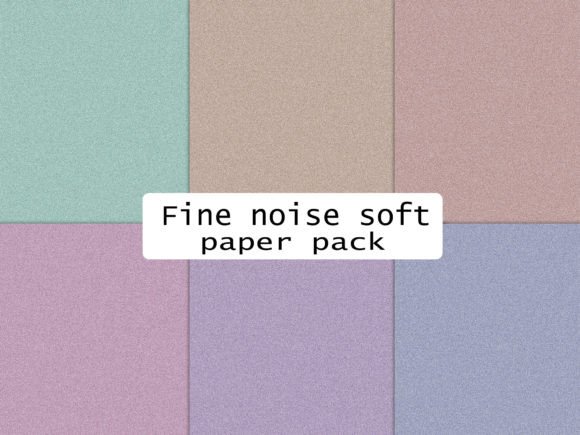
Evaluating the Fine Noise Soft Paper Pack for Professional Design Workflows
In the realm of digital design and content creation, the pursuit of texture often leads to a paradox: creators seek organic warmth but frequently settle for assets that feel synthetic or overly aggressive. The Fine Noise Soft Paper Pack addresses this specific friction point by offering a collection of textures that prioritize subtlety over spectacle. For professionals ranging from editorial designers to freelance illustrators, the value of a texture pack lies not in its novelty, but in its utility as a foundational layer that enhances rather than distracts. This resource distinguishes itself through high-fidelity scanning and a balanced tonal range that integrates seamlessly into modern, non-destructive workflows.
Defining Characteristics and Technical Fidelity
The primary differentiator of the Fine Noise Soft Paper Pack is its adherence to realistic grain structures without the heavy contrast often found in generic grunge overlays. Many stock textures suffer from crushed blacks or blown-out highlights, forcing designers to spend excessive time adjusting levels before the asset becomes usable. In contrast, this pack maintains significant dynamic range within the mid-tones. This technical characteristic allows for greater flexibility when applying blend modes such as Multiply, Overlay, or Soft Light, as the texture responds predictably to underlying color values.
The resolution and bit depth are equally critical for professional output. Assets within this category typically support high-DPI printing and large-format digital displays without exhibiting pixelation or repetitive tiling artifacts. The "soft" designation in the title refers to both the tactile quality of the source paper and the post-processing approach. The noise profile is fine-grained, mimicking high-quality bond or cotton rag paper rather than rough cardboard or distressed surfaces. This makes it particularly suitable for projects requiring a sense of refinement, such as luxury branding, minimalist packaging, or literary publications where readability must remain paramount.
Integration into Non-Destructive Workflows
Experienced designers evaluate assets based on how easily they fit into existing systems. The Fine Noise Soft Paper Pack excels in environments that rely on Smart Objects and adjustment layers. Because the noise is uniform yet organic, it serves as an excellent base for creating custom brushes, displacement maps, or masking layers. For users working in Adobe Photoshop, Affinity Photo, or Procreate, the texture acts as a versatile modifier. It can add tooth to digital paintings to simulate traditional media, or provide a unifying grain across composite images that might otherwise look disjointed.
Furthermore, the consistency across the pack ensures that switching between different textures does not require recalibrating opacity or blend mode settings for every new file. This reliability reduces cognitive load during long production cycles. When a designer knows that Texture A and Texture B share similar luminance values and grain density, they can swap them rapidly to test variations without breaking their creative flow. This level of standardization is often missing in free or lower-tier commercial packs, where individual files may vary wildly in exposure and contrast.
Practical Applications Across Creative Disciplines
The versatility of the Fine Noise Soft Paper Pack extends across multiple verticals, though its impact varies depending on the specific use case. Understanding these nuances helps professionals determine if the investment aligns with their current project pipeline.
- Editorial and Publishing: For book cover designers and layout artists, the soft noise provides a necessary analog anchor to digital typography. It prevents flat colors from appearing sterile on e-readers while maintaining legibility in print. The subtle texture helps bridge the gap between screen and page, making digital-first publications feel more tangible.
- Brand Identity and Stationery: Minimalist brands often struggle to convey quality through simple logos and limited color palettes. Applying a fine paper texture to business cards, letterheads, or social media templates adds perceived value without altering the core visual identity. The texture suggests craftsmanship and attention to detail, which are essential attributes for boutique agencies and consultants.
- Digital Illustration and Concept Art: Artists transitioning from traditional media often miss the feedback of paper tooth. This pack offers a digital surrogate that breaks up smooth gradients and adds complexity to flat shading. Unlike heavy canvas textures that can overpower delicate line work, the fine noise supports intricate details without competing for visual attention.
- Web and UI Design: While heavy textures are generally avoided in interface design due to accessibility concerns, ultra-subtle noise is seeing a resurgence. Used at very low opacity, the Fine Noise Soft Paper Pack can reduce color banding in gradients and add a premium feel to dark-mode interfaces. However, practitioners must exercise caution to ensure WCAG compliance and maintain text clarity.
Balancing Aesthetics with Functional Constraints
Despite its strengths, the Fine Noise Soft Paper Pack is not a universal solution. Its effectiveness is contingent upon appropriate application. One common pitfall is overuse; applying the texture at 100% opacity rarely yields professional results. The asset is designed to be felt rather than explicitly seen. Professionals should treat it as a seasoning rather than a main ingredient. Testing across different devices and print proofs is mandatory, as screen calibration can significantly alter the perception of fine grain. What looks like a sophisticated whisper on a calibrated reference monitor may disappear entirely on a mobile device or become muddy in newsprint reproduction.
Additionally, users working exclusively in vector-based environments like Adobe Illustrator may find the raster nature of these textures limiting. While they can be embedded or linked, they increase file size and complicate scaling. For scalable vector graphics (SVG) or logo design, procedural noise generators or vector-based grain effects might offer superior long-term flexibility. The Fine Noise Soft Paper Pack is best reserved for final presentation mockups, rasterized exports, or mixed-media compositions where pixel-level detail is required.
Assessing Long-Term Value and Return on Investment
For freelancers and small business owners, every asset purchase must justify its cost through time savings or quality improvements. The Fine Noise Soft Paper Pack delivers value primarily by reducing the need for custom texture creation. Scanning, cleaning, and grading physical paper is a labor-intensive process that requires specialized equipment and expertise. By providing a curated, production-ready library, this pack frees up hours of pre-production time. Over the course of a year, this efficiency translates directly to increased capacity for billable work or creative exploration.
Licensing terms also play a crucial role in the evaluation. Professional-grade packs typically include comprehensive commercial licenses that cover client work, merchandise, and digital distribution. Verifying these rights is essential to avoid future legal complications. The Fine Noise Soft Paper Pack generally targets the commercial sector, implying robust usage rights, but users should always review the specific EULA. This security is part of the product's value proposition; it eliminates the ambiguity often associated with free resources found on open platforms.
Who Should Prioritize This Resource?
The ideal user profile for the Fine Noise Soft Paper Pack includes designers who regularly deliver polished, tactile aesthetics to clients who value nuance. If your portfolio consists primarily of corporate tech interfaces, data visualization, or neon-cyberpunk art, this pack may see limited use. However, for those in publishing, wellness branding, artisanal product marketing, or heritage-style illustration, it is likely to become a staple in the asset library.
Educators and content creators teaching digital art techniques will also find significant utility. Having a reliable, neutral texture set allows students to focus on blending modes and layer management without being distracted by poor-quality source material. The consistent grading makes it an effective pedagogical tool for demonstrating how texture interacts with color theory and lighting.
Ultimately, the Fine Noise Soft Paper Pack represents a mature approach to digital texturing. It rejects the trend of instant gratification in favor of sustainable, high-quality utility. For professionals who understand that the difference between good and great design often lies in the invisible details, this collection offers a dependable foundation. It is less about transforming an image instantly and more about elevating the baseline quality of every project it touches. By integrating these assets thoughtfully, creators can achieve a level of sophistication that resonates with audiences on a subconscious level, reinforcing the message through the medium itself.